
How to Prevent Inhaling Welding Fumes: The Ultimate Safety Guide for Welders
Whether you’re just starting your welding career or you’ve been at it for years, there’s one thing that should never be taken lightly: the fumes you breathe every single day on the job.
Here’s the hard truth – welding fumes are toxic and carcinogenic. That’s not scare tactics or exaggeration, it’s backed by OSHA, the CDC, and health agencies worldwide. The reality is that every breath of unprotected welding fume exposure puts your long-term health at risk.
You’ve probably heard the statistics. OSHA sets the permissible exposure limit for welding fume at just 5 mg/m³. Cross that line, and you’re looking at serious health consequences – respiratory issues, metal fume fever, nervous system damage, and various types of cancer. Sounds pretty grim, right?
But here’s the good news: protecting yourself from welding fumes doesn’t have to be rocket science. With the right approach and some smart strategies, you can dramatically reduce your exposure and keep doing the work you love without sacrificing your health.
We’ll walk you through exactly how to manage the hazards that come with breathing welding fumes. From fume extraction and proper ventilation to smart welding techniques and respiratory protection – you’ll have everything you need to stay safe on the job.
What You’re Actually Breathing When You Weld
Before we get into the solutions, let’s talk about what you’re dealing with. Understanding the enemy is half the battle when it comes to protecting yourself.
The Science Behind Welding Fumes
When you strike that arc, you’re creating temperatures hot enough to vaporize metal. We’re talking about metals heating above their boiling point during the welding process. Those metal vapors then condense when they hit air and oxidize, creating extremely fine particles mixed with various gases. What you end up with is a complex mixture containing particles from your electrode, the base metal, coatings, and any contaminants hanging around on the surface.
Here’s where it gets concerning – these particles are incredibly small. When they first form, fume particles measure less than 1 μm (0.001 mm) in diameter. Over time, they stick together and grow to a range of 1-7 μm. The particles floating around your breathing zone typically measure 2 μm or less and can stay airborne for several hours without proper ventilation.
Why does size matter so much? These fine particles are small enough to bypass your body’s natural defenses and penetrate deep into your lungs. To put this in perspective, metal particles in weld fumes are 50 to 75 times smaller than the width of a human hair. Your respiratory tract’s cilia – those tiny hairs that normally help clear stuff out – can’t readily handle particles in the 1-7 μm range, making them the greatest health hazard.
What’s Actually in Those Fumes?
The International Agency for Research on Cancer doesn’t mince words – they’ve classified all welding fumes as Group 1 carcinogens. That’s the same category as asbestos and tobacco smoke.
The list of metals commonly found in welding fumes reads like a chemistry textbook: aluminum, antimony, arsenic, beryllium, cadmium, chromium, cobalt, copper, iron, lead, manganese, molybdenum, nickel, silver, tin, titanium, vanadium, and zinc. Each one brings its own set of health concerns.
But wait, there’s more. Process gases add another layer of danger to the mix. Shielding gases like argon, helium, nitrogen, and carbon dioxide can displace oxygen in confined spaces. The welding arc itself generates nitric oxide, nitrogen dioxide, carbon monoxide, ozone, phosgene, hydrogen fluoride, and additional carbon dioxide.
Stainless steel welding deserves special mention because it produces hexavalent chromium (Cr(VI)) – one of the nastiest fume hazards you’ll encounter. This compound causes cancer of the lungs, nasal passage, and sinuses, plus damage to your eyes, skin, nose, throat, and lungs. Manganese oxide irritates your respiratory system and damages your nervous system, potentially leading to Parkinson’s disease.
If you’re welding steel, iron oxides make up about 41% of the fume composition, with manganese at 18% and silicon at 6%. Cadmium oxide, which you’ll find when welding cadmium-plated metals, proves extremely toxic and can cause acute chemical pneumonitis and death. Research shows that stainless steel fumes containing chromium and nickel are more toxic to human lung cells compared to mild steel fumes.
What This Means for Your Health
The effects of welding fume exposure aren’t just theoretical – they’re real, and they can hit you both immediately and down the road.
Short-term exposure can leave you dealing with eye, nose, and throat irritation, dizziness, and nausea. Metal fume fever is a common reaction that feels like the flu – fever, sweats, throat tickle, eye and nasal irritation, and impaired lung function. Zinc oxide from galvanized steel specifically triggers this with symptoms including fatigue, dry throat, and chills.
Studies show that a large number of welders experience some type of respiratory illness. If you’re a full-time welder, you’re looking at potential bronchitis, airway irritation, and lung function changes. Pulmonary infections tend to be more severe, last longer, and happen more frequently among welders. Research suggests that metal fumes might increase your risk for lung infections, even from relatively harmless bugs.
Long-term exposure is where things get really serious. OSHA states that welding fume may cause lung damage and various types of cancer, including lung, larynx, and urinary tract. Studies indicate that exposure to nickel in welding fumes increased lung cancer odds by 60%.
Manganese exposure creates particularly worrying neurological effects. When you inhale manganese, it bypasses your body’s normal defense mechanisms, leading to buildup and damage in your lungs, liver, kidneys, and central nervous system. Prolonged exposure to concentrations above 1 mg/m³ may lead to manganism – a Parkinsonian syndrome with tremors, slowness of movement, muscle rigidity, and poor balance. Some studies show that welders exposed to low levels of manganese below 0.2 mg/m³ perform more poorly on tests of brain function and motor skills, with changes in mood, short-term memory, altered reaction time, and reduced hand-eye coordination.
Affected workers frequently show abnormal manganese accumulations in the globus pallidus region of the brain, which regulates movement. Carbon monoxide, heat, and stress can also contribute to neurological problems in welders.
The bottom line? This isn’t something to take lightly. But don’t let this scare you away from welding – let it motivate you to protect yourself properly. The strategies we’re about to cover can dramatically reduce your exposure and keep you healthy for years to come.
Reducing Fume Production at the Source
The smartest approach to welding fume safety? Stop the problem before it starts. Think of it this way – it’s much easier to prevent fumes from forming than to try capturing them after they’re already in the air.
The occupational safety hierarchy puts source control and substitution above extraction or personal protective equipment for good reason. Choose the right processes, materials, and parameters, and you can slash the volume of hazardous fumes your work produces.
Choose Welding Processes That Generate Less Fume
Not all welding processes are created equal when it comes to fume production. The differences are dramatic – fume emission rates per gram of electrode consumed range from approximately 13 mg for SMAW down to as low as 1 mg for Cold Metal Transfer (CMT) processes.
Here’s what you need to know about your options:
Gas Tungsten Arc Welding (GTAW/TIG) produces minimal fumes because the filler metal doesn’t carry welding current and maintains a stable arc. If you can use TIG for your project, it’s one of your cleanest choices.
Submerged Arc Welding (SAW) contains most fume under a bed of flux, making it excellent when reducing fume generation is your priority. The catch? SAW requires flat or horizontal positioning and works primarily for mechanized welding of thick steel plate.
Gas Metal Arc Welding (GMAW) varies considerably. Pulsed spray GMAW generates approximately 1.5 mg of fume per gram of wire consumed, while standard spray-mode GMAW can produce over 390 mg per minute. That’s a huge difference.
Flux Cored Arc Welding (FCAW) typically ranks as the biggest fume producer due to high deposition rates. Stick welding (SMAW) results in about 2 percent welding fume by weight of filler material.
For mild steel, SMAW had twice the normalized fume generation rate as the next highest process. If you’re dealing with high fume exposures that are tough to control through engineering methods, substituting GMAW for SMAW represents a major improvement.
Select Cleaner Consumables and Materials
Your choice of filler metal makes a bigger difference than most welders realize. Over 90% of fume emissions in GMAW and MAG welding come from overheating and vaporization of the solid filler electrode.
Pay attention to electrode grade. ER70S-6 contains higher manganese levels than ER70S-3. Since manganese levels often determine whether you’re in regulatory compliance, this selection matters more than you might think. Metal cored electrodes used with pulsed current power sources can yield low fume generation rates.
Shielding gas composition affects both arc physics and fume generation. Higher carbon dioxide content focuses heat input at the melting wire tip, causing localized overheating. Higher argon content spreads arc heat over a wider area, reducing localized overheating and metal vapor generation.
Using 100% CO2 requires a 1-2 volt procedure increase compared to argon blends, adding energy that boils off more metal and creates additional fume. The takeaway? Higher argon percentages in blended gases reduce fume generation.
Optimize Your Welding Parameters
Your welding parameters have a significant effect on emission rates. Wire speed, arc length, and correction parameters all influence the level of harmful substances you’re generating.
Research shows welding fume emissions stay lowest at 5 m/min wire speed in neutral welding torch position. Pulse welding at wire speeds of 5 m/min and 8 m/min produces significantly lower emission rates (0.55 mg/s and 0.7 mg/s respectively) compared to 11 m/s, which generates 1.7 mg/s.
You can optimize the arc using arc length correction to significantly reduce welding fume emissions at all wire speeds. The emission rate correlates with short circuit frequency – a high number leads to significantly higher rates. Advanced pulsed waveform technology reduces weld fume emissions by 66 percent compared to traditional constant-voltage GMAW.
Avoid overwelding. Properly sized welds result in the lowest fume amount for a given process, whereas overwelding unnecessarily increases welding fume. It’s that simple – don’t put down more metal than the job requires.
Remove Coatings Before Welding
Coatings on metal make welding fumes more dangerous. These substances vaporize during welding and become part of the fumes, increasing volume and introducing harmful compounds.
Common hazardous coatings you need to watch for include metalworking fluids, oils, rust inhibitors, zinc on galvanized steel (which vaporizes to produce zinc oxide fume), cadmium plating, vapors from paints and solvents, lead oxide primer paints, and some plastic coatings. Welding galvanized metals without preparation releases toxic zinc oxide fumes that can cause metal fume fever.
Centers for occupational health and safety strongly recommend removing coatings and residues before welding. Removal should extend at least 4 inches from the weld area. Use stripping products and ensure all residues are removed before welding. For very toxic coatings, employ wet slurry vacuum removal techniques.
Here’s what you shouldn’t do – don’t grind coatings, as grinding dust may prove toxic. Follow appropriate safety procedures during coating removal, based on risk assessments and potential exposures. As an added bonus, coating removal also improves weld quality.
Getting Your Ventilation Right: Fume Extractors That Actually Work
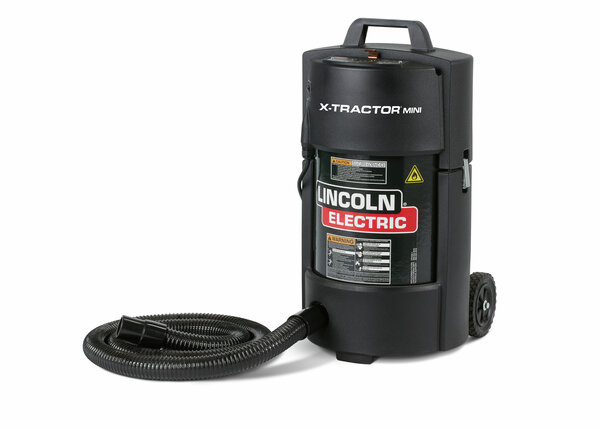
Now that you understand what you’re up against with welding fumes, let’s talk about your first line of defense: proper ventilation. You’ve got three main jobs for any ventilation system in your welding operation – removing contaminants from your breathing zone, preventing flammable gas buildup, and keeping oxygen levels where they should be. But for fume safety, job number one is getting those contaminants out before they reach your lungs.
Your Options for Fume Extraction Equipment
You’ve got several routes you can take when it comes to welding fume extractors, and the right choice depends on your specific setup and needs.
Mobile fume extraction systems are your go-to if you’re welding in different spots around the shop. These units roll wherever you need them – light, medium, or heavy-duty depending on what you’re working with. Perfect for shops where you’re not tied to one welding station all day.
Downdraft tables work by pulling fumes down through the work surface instead of letting them rise into your face. The air speed needs to be strong enough to keep contaminants from accumulating above the table. These are great for smaller pieces and give you hands-free operation without getting in your way.
Extraction hoods make sense for robotic welding cells or dedicated welding areas. You can mount them on the ceiling or use modular hoods that grab rising fumes before they spread throughout your workspace. Flexible extraction arms give you the positioning control you need.
Portable high vacuum systems are your best bet for confined spaces like ship hulls and tanks, hard-to-reach spots, or occasional projects. For larger operations, fixed systems with installed ductwork, hoods, filters, and fans handle big workspaces – though they’re the most expensive route due to installation complexity.
Positioning Your Extractor for Maximum Protection
Here’s something that might surprise you: positioning matters way more than system size when it comes to protecting yourself from welding fumes. Fumes rise fast and spread quickly, so poor placement means you’re breathing them before extraction even starts.
Get that suction hood as close to your welding arc as possible without interfering with your work. The sweet spot is 150-300mm from the fume source for effective capture. Go beyond that distance and you’re losing suction strength where you need it most. Your flexible ducting should maintain at least 100 ft/min velocity across the welding arc, with the hood positioned about 1 duct diameter away.
Don’t make the rookie mistake of putting the hood directly above your weld – it’ll mess with your shielding gas and hurt weld quality. Side or rear positioning lets fumes flow naturally into the hood. Position that capture point at approximately 45 degrees above the arc, and make sure the hood angles away from you to pull smoke away from your breathing zone.
Watch out for cross ventilation throwing off your capture efficiency. Air flow interference can blow fumes away from where you want them to go. A welding enclosure eliminates these cross ventilation headaches.
Local Exhaust vs General Ventilation: Which Do You Need?
Local exhaust ventilation (LEV) captures toxic gases and fumes before they mix with room air – that makes it your best choice for welding fume removal. LEV systems grab contaminants right at the source, giving you the strongest protection since toxic elements never get a chance to mix with your breathing zone.
General ventilation tries to reduce airborne contaminant concentration by bringing in fresh or filtered air to acceptable levels. Unlike LEV systems, general ventilation equipment usually doesn’t filter anything – it just moves dirty air somewhere else. Natural dilution ventilation is the least effective option because you have zero control over how contaminants move through your work area.
You’ll need LEV when you’re dealing with oil mist, smoke, or fumes at machines, working close to contamination sources, or when you have to meet regulatory air quality limits. General ventilation might work only if pollutants are low concentration, evenly distributed, and you’re not dealing with hazardous fumes.
Trust us – LEV is worth the investment when your long-term health is on the line.
Smart Welding Techniques and Positioning That Actually Work
You’ve got your fume extractor running, but here’s something many welders overlook: your positioning and technique can make or break your protection. Even the best extraction system won’t help if you’re putting yourself right in the path of those rising fumes.
The truth is, how you position your body and approach your work determines whether those contaminants reach your breathing zone or get pulled away safely.
Keep Your Head Out of the Fume Plume
This might sound obvious, but welding position affects your fume exposure more than most welders realize. When you’re working in the flat position, you naturally bend over the workpiece – and that puts you right in the worst spot possible. You’re essentially positioning your face directly above the densest part of the fume cloud.
Here’s a simple fix that makes a huge difference: overhead, vertical, and horizontal positions automatically reduce your exposure by changing where that plume travels relative to your face.
The concentration of toxic compounds peaks directly above the arc. Position your head away from this rising plume and you’ll avoid inhaling the densest fume cloud. Sometimes it’s as simple as adjusting your work height or changing the angle of your setup.
Get strategic about workpiece placement. Tilt or rotate parts so fumes rise away from your breathing zone instead of straight up into your face. Turntables work great for this – they let you reposition workpieces and guide fumes away from where you’re working. When you can, seated welding positions help keep fume exposure away from your face.
Work With Natural Air Flow, Not Against It
Air flow direction matters more than you might think. Position yourself so air flows from your back toward the front. This pushes fumes forward and away from your breathing zone. If you’re welding outdoors or in open areas, stay upwind of your work.
Cross ventilation can be your friend or your enemy. A cross draft can blow fume away from you toward your extraction equipment – but it can also redirect fumes right into your breathing zone if you’re not careful.
Here’s a specific example: if your source capture equipment sits north of the weld point and you’ve got a breeze blowing from southeast to northwest, position yourself at the southeast corner to minimize cross ventilation interference. A southern to northern draft actually helps guide fumes away when your capture equipment is positioned to the north.
Partitions or curtains in your welding area help control cross ventilation. Welding enclosures virtually eliminate these cross ventilation problems altogether.
Don’t Block Your Own Extraction System
This is where good technique really pays off. Your body position relative to your extraction equipment determines how well the system can do its job. Never position your body between the weld and your fume extraction arm. When you do this, you’re blocking the suction path and forcing fumes to travel through your breathing zone before they get captured.
Face position is just as important. Keep your face out of the weld plume so you don’t interfere with your extraction arm’s ability to pull those fumes away. You can adjust your welding sequence to keep yourself out of the direct fume path during different stages of the job.
Follow proper welding procedures and avoid overwelding – this reduces the total volume of fume your extraction system has to handle. Limit cross ventilation so your fume extraction arm can work most effectively. With proper training, you’ll develop positioning habits that keep you out of the fume path and help you manage these breathing hazards.
Setting Up Your Workspace for Maximum Protection
Here’s something that gets overlooked way too often: your workspace setup can make or break your fume safety efforts. You can have the best extraction equipment in the world, but if your workspace isn’t properly configured, you’re still putting yourself and your coworkers at risk.
Physical isolation isn’t just about keeping welding fumes away from other workers – though that’s certainly important. It’s about creating an environment where your safety systems can actually do their job effectively.
Keep Welding Areas Away from Everyone Else
Welding hazards don’t stay put. Sound, glare, fumes, spatter, and sparks can affect people much farther away than you might think. The magic number? You need at least 35 feet (10.7 meters) of clearance from your welding area.
When you can’t relocate to a dedicated welding shop, you’ll need to clear out combustible materials within that radius or move your work somewhere safer. This isn’t just about fume safety – it’s about preventing fires and protecting everyone around you.
Arc glare can damage someone’s eyesight in seconds, even if they’re just walking by. That’s why isolation matters for more than just fume control. If you can’t move to a separate area, portable fire-resistant screens are your next best option. Make sure you block off doorways, windows, and any other openings with fire-resistant material.
Welding Screens and Curtains: Your Mobile Protection
Welding screens are pretty straightforward – they’re made from semitransparent vinyl material mounted on portable frames that you can move around as needed. You can set them up in three- or four-sided configurations to completely enclose your work area, leaving just a small doorway for access. These work great on construction sites or in shops where you’re moving between different welding stations.
Curtains offer a more permanent solution. They hang from frames or ceiling mounts through mounting holes. Vinyl grommeted curtains attach to frames or fences using the grommeted edges, while strip curtains use overlapping PVC strips that mount to structures or ceilings. Most permanent welding booths use curtains since they stay in one place.
Both options protect you and your work area from sparks, spatter, and ultraviolet light. Plus, they help control cross ventilation that can interfere with your fume capture systems.
Getting Your Ventilation Right
Your workspace ventilation works hand-in-hand with your fume extractors to keep exposure levels where they need to be. The minimum standard calls for six air changes per hour in welding spaces. If you’re relying on natural or mechanical ventilation instead of local exhaust hoods, OSHA requires at least 2,000 cubic feet per minute per welder.
Natural ventilation through roof vents, doors, and windows can work, but it depends heavily on your building’s size and layout. Mechanical ventilation with fans gives you much more reliable and effective results.
Here’s what you need to know: natural ventilation won’t cut it in confined spaces, areas with obstructed airflow, or anywhere you’re dealing with carcinogenic substances. In those situations, you need mechanical systems you can count on.
When to Use Respiratory Protection Equipment
Understanding PPE as a Last Resort
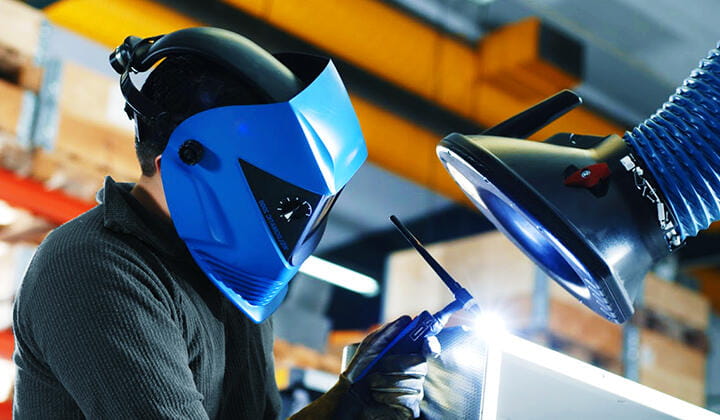
Let’s be clear about something important: respirators shouldn’t be your first line of defense against welding fumes. They represent the lowest level in the hierarchy of controls for welding fume safety. You need to exhaust engineering controls like welding fume extractors and administrative controls first.
Why? Because the hazard is still there when you’re relying on respirators – all you’re doing is putting a barrier between you and the danger. Federal regulations actually mandate using engineering controls before turning to respirators. That said, respiratory protection may be required in addition to engineering controls when they can’t adequately reduce your exposure below permissible limits.
Types of Respirators for Welding
When you do need respiratory protection, you’ve got options. Air-purifying respirators (APRs) filter contaminants from the air around you, while supplied-air respirators (SARs) bring you clean air from an external source.
Disposable masks and half-mask respirators offer an Assigned Protection Factor of 10, which means they reduce your exposure to one-tenth of the airborne contaminant concentration. Powered air-purifying respirators (PAPRs) step it up with an APF of 25, using battery-powered blowers to deliver filtered air through breathing tubes.
Filter classifications include N95 and P95 (95% efficiency at 0.3 microns), plus N100 and P100 (99.97% efficiency). N-series filters won’t protect against oil aerosols, while P-series filters are oil-resistant. You’ll only need Class 100 filters when specific OSHA regulations call for them.
Proper Fitting and Maintenance
Here’s where things get serious about compliance. Employers must conduct fit testing before you use a respirator for the first time and then annually after that. They need to offer several sizes and models to make sure you get a proper fit. Got facial hair? You’ll need to stay clean-shaven around the seal areas because facial hair prevents effective sealing.
Training isn’t optional either. You need to understand why the respirator is necessary, what its limitations are, and how to properly use, inspect, maintain, and store it[233]. Medical evaluations through OSHA questionnaires reviewed by licensed health professionals determine whether you’re suitable for respirator use.
Final Thoughts on Welding Fume Safety
There you have it – a complete approach to protecting yourself from welding fumes that actually works. You don’t need to choose between doing the work you love and staying healthy. The key is building fume safety into every single welding job, not treating it as something you’ll get around to later.
Start with source control – choose cleaner processes and materials when you can. Get that fume extractor positioned right, and don’t forget the basics like keeping your head out of the fume plume. These simple changes can make a dramatic difference in what you’re breathing every day.
Remember, respirators are your backup plan, not your primary defense. The real protection comes from controlling those fumes before they ever reach your breathing zone.
You’ve got the knowledge now. You know what works and what doesn’t. Most importantly, you know that protecting your long-term health doesn’t have to be complicated or expensive.
Consistency is what matters most – make these practices part of your routine, and you’ll be welding safely for years to come. Your future self will thank you for it.

Leave a Reply